New Metrics
The new and evolving metrics that are helping expand the way businesses create, quantify, manage and report their impacts – and the value they deliver
FTSE Russell's New Data Model Tracks Ratio of Companies' 'Green Revenues' to Total Revenues

Global index and data provider FTSE Russell today announced the launch of its LCE data model, which measures the “green” revenues of 13,400 public companies, representing 98.5 percent of total global market capitalization. Revenues from a broad r... View More
#BusinessCase: Top 9 Reasons for Businesses to Proactively Manage Water
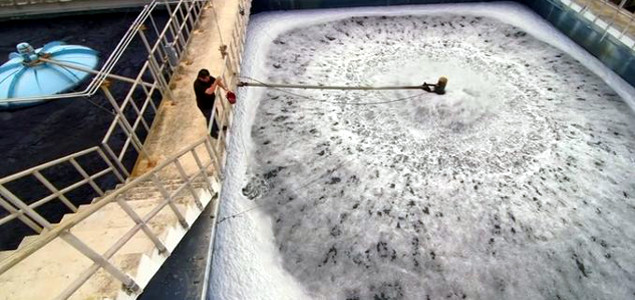
A sustainability manager at a large auto parts manufacturer recently explained the company’s lack of interest in water management this way: “It's not worth our time. Water is too cheap and no one cares." Moreover, the executive acknowledged ... View More
ExxonMobil, Chevron Face Shareholder Pressure to Address Risk, Adopt New Reporting Metric
Oil company shareholders are voting on resolutions today that propose to cut spending on opening new oilfields and change how they report reserves, among others. In Dallas, Texas, ExxonMobil shareholders are voting on four climate change-related reso... View More
Inaugural CFP Report Benchmarks Progress, Best Practices in Chemical Management

In the first initiative of its kind to publicly benchmark corporate chemicals management, the Chemical Footprint Project has published its inaugural report. The results provide valuable insights into how leading companies manage chemicals in their pr... View More
Toyota, Ben & Jerry’s Among 155 Companies to Set Science-Based Emissions Reduction Targets

Forty-one companies have joined the Science-Based Targets initiative since the COP21 climate negotiations in December. On the eve of the Climate Action Summit in Washington, D.C. last week, the initiative announced that a total of 155 companies have ... View More
Sustainable Extravagance: Kering Calls for Collaboration to Change Paradigm in Luxury Goods
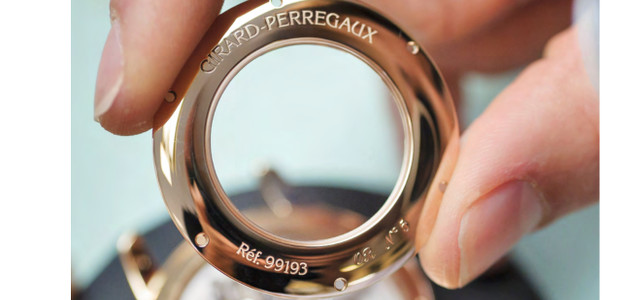
Luxury goods and responsible consumption need not be contradictory terms — that was the core takeaway from a livestream Q & A session held earlier this week by Kering, one of the world’s leading manufacturers of luxury apparel and home to bra... View More
Beyond the SEC and Disclosure: Why Materiality Matters
Materiality is murky – especially when it comes to sustainability. Reporting on material issues in the financial context has been legally required for decades and is widely understood. It is less widely understood – and not yet well applied – i... View More
Oxfam: Big 10 Food Brands Must Walk Their Talk to Truly Boost Social Sustainability
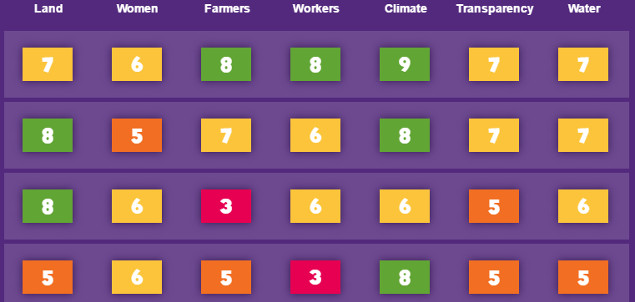
Nine of the “Big 10” global food and beverage companies - Associated British Foods (ABF), Coca-Cola, Danone, General Mills, Kellogg, Mars, Mondelez, Nestlé, PepsiCo and Unilever - have improved their ratings by at least 10 percent in three years... View More
How to Take the Pain Out of CSR Reporting

Corporate Social Responsibility (CSR) and other forms of sustainability reporting can be a painful process. Whether you’re a one-person sustainability, health and safety manager or your company has staff around the world who share reporting respons... View More
G-Star, Ted Baker Lead Fashion Sustainability Disclosure with MADE-BY’s Revamped Scorecards
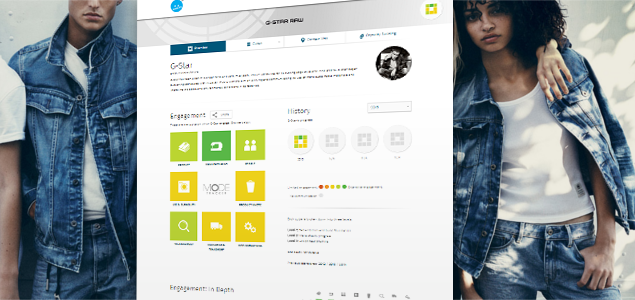
Fashion brands’ sustainability performance has lacked independent verification and true transparency. European non-profit MADE-BY is hoping their ‘ground-breaking’ new tool, called MODE Tracker, will change that. ... View More
Chris Hale: The Future of Impact Investing is About Measuring Impact

That investing to make a positive impact as well as a dime has evolved considerably over the past few years has turned on its head a long-standing worldview that the sole purpose of business and investing is to make money, while solving social and en... View More
True Materiality and Integral Thinking: Editor's Postlude

It has been my pleasure to edit this tour-de-force 6-part series — now an e-book — by my colleague, Ralph Thurm, in which he lays out his vision for how integral thinking and true materiality can catalyze a regenerative and inclusive economy, lev... View More
New Evidence Bolsters Claims of Connectivity Between CSR and Market Caps

Last August, I published an article here in which I described what, to me, is the most compelling business case for corporate sustainability or CSR extant: the fact that it literally drives the market values of publicly traded firms up or down in mea... View More
How Do We Assess Impact (and Why Should We)?
I recently attended the Asian Development Bank’s (ADB) 2nd Inclusive Business Forum for Asia in the Philippines, where I sat in on an engaging discussion on assessing the merits of impact investments. ... View More
Integral Thinking and True Materiality Define Trust, Innovation, Resilience (Part 6)

This is the final part of a 6-part series about integral thinking and true materiality. It proposes a new impetus to develop reporting that is able to serve the idea of a green & inclusive economy. ... View More
How to Make a Material Impact on Your Company's Sustainability

Sustainability Rising It will come as no surprise to this community that sustainability has moved well beyond social and environmental responsibility circles to become a C-suite priority. The numbers give voice to the trend: ... View More
Integral Thinking & True Materiality, Part 5: Scalability Opportunities Define the Size of Impact

This is part 5 of a 6-part series about integral thinking and true materiality. It proposes a new impetus to develop reporting that is able to serve the idea of a green & inclusive economy. Read Part 1, Part 2, Part 3, and Part 4. ... View More
Q&A: How the YK Center Is Pushing Forward the ‘New Economy’
That the future of profit is purpose is the modus operandi of the YK Center, a self-proclaimed “for-benefit organization” striving to push the needle on a more sustainable economy. ... View More
Integral Thinking, Part 4: Defining Success Leads to True Value Creation

This is part 4 of a 6-part series about integral thinking and true materiality. It proposes a new impetus to develop reporting that is able to serve the idea of a green & inclusive economy. Read Part 1, Part 2, and Part 3. ... View More
What If 'Opposites' Aren't Really Opposite?: Part 19

In 18 earlier parts of this series, Claire Sommer, Jill Lipoti and I developed 37 pitfalls in the sustainable business metrics field, based on the experiences of many mostly non-business fields (Find them here.). ... View More